Sets
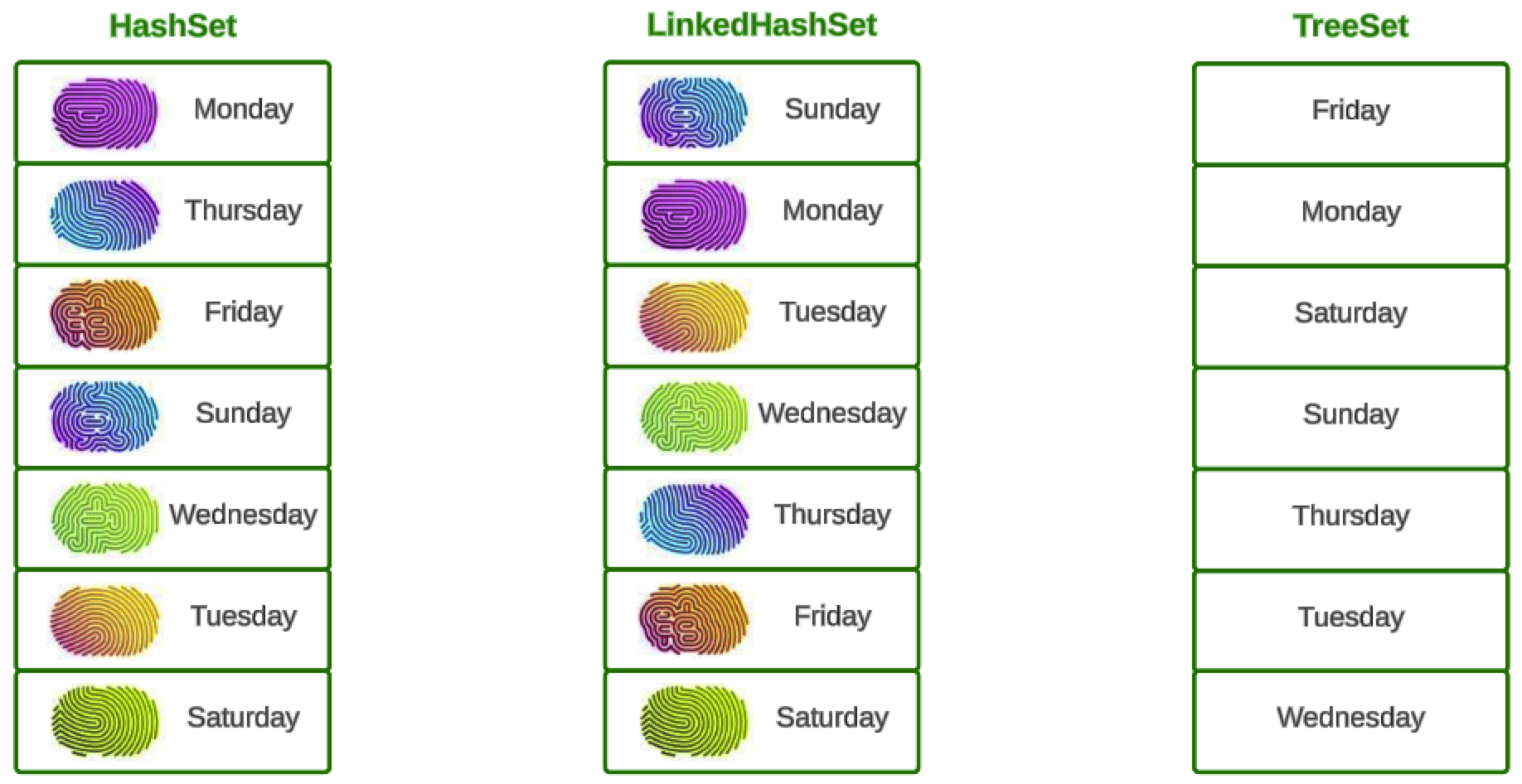
A set holds each value only once, and HashSet, LinkedHashSet and TreeSet differ in the order they give back the values.
Journeyman · Java · Updated
Sets have similar functionality to lists with a few distinct differences.
- Sets cannot contain duplicate values
- The order of the values depends on the type of set
- Set values cannot be accessed by their ordinal position, only by iterating through each value
- There are three types of sets:
HashSet- no particular order (set by each value's hash)LinkedHashSet- the order the values were addedTreeSet- sorted in natural order (alphabetical for strings)
Set<String> weekdays = new HashSet<>();

weekdays.add("Sunday");
weekdays.add("Monday");
weekdays.add("Tuesday");
weekdays.add("Wednesday");
weekdays.add("Thursday");
weekdays.add("Friday");
weekdays.add("Saturday");

weekdays.forEach(day -> System.out.println(day));
Do it: the party's guest lists, without repeats
Friends reply to a party invitation by text, and some reply twice ("Yes!" then "Still coming!"). The host wants two lists of the guests, each name only once: one in the order people first replied, to thank them in that order, and one in alphabetical order, for the name cards at the door.
Both methods get one value:
replies: the name on each reply, aList<String>, in the order the replies came in. A name can be on it more than once.
For example, with these replies:
List<String> replies = List.of("Olivia", "Ethan", "Sophia", "Ethan", "Liam", "Olivia");
| Method | It returns |
|---|---|
guestsInReplyOrder(replies) |
a set holding Olivia, Ethan, Sophia, Liam, in that order |
guestsInAlphabeticalOrder(replies) |
a set holding Ethan, Liam, Olivia, Sophia, in that order |
Either way, there are 4 guests, not 6: Ethan and Olivia each count once.
Your job: write the two methods. Each returns a Set<String>.
guestsInReplyOrder(List<String> replies): each name once, in the order it first appears inreplies.guestsInAlphabeticalOrder(List<String> replies): each name once, in alphabetical order.- Choose the kind of set that gives each order by itself, with no sorting of your own.
- When there are no replies (an empty list), each returns an empty set.
Practiced live on the lesson page: write the Java right there and check it.