Tomorrow is Thanksgiving: 7 pieces of open-source software to be thankful for
Tomorrow is Thanksgiving, so here are seven pieces of free, open-source software to be thankful for. They wake you up, show you the web, keep it safe and let you write code, and most people never know they're there.
By Gregor Dzierzon ·
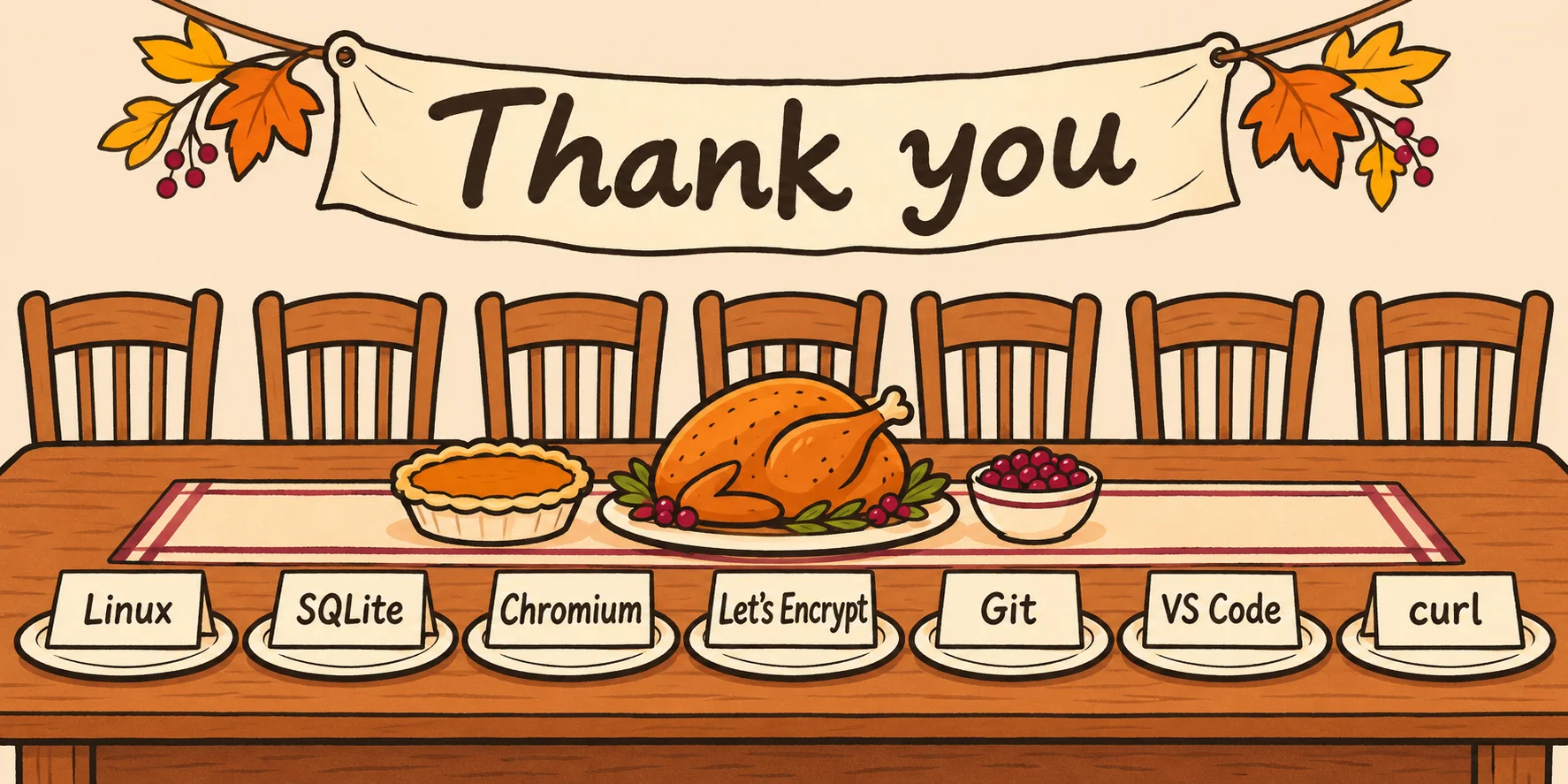
Tomorrow is Thanksgiving, the day we stop and count what we're thankful for. Here's something that's rarely on the list: software you used today, probably before breakfast, that you didn't pay for and that was written by people you'll never meet.
It's called open-source software: software whose code anyone can read, use, change and share, under a license that says so. Some of it is written by volunteers in their spare time, and some by companies that share it on purpose. It's in your phone, your browser and the tools you write code with, and most people never know it's there.
So here's a list of seven pieces of open-source software to be thankful for, in the order you probably met them today: from the alarm that woke you up to the code you write, plus one that works all day out of sight.
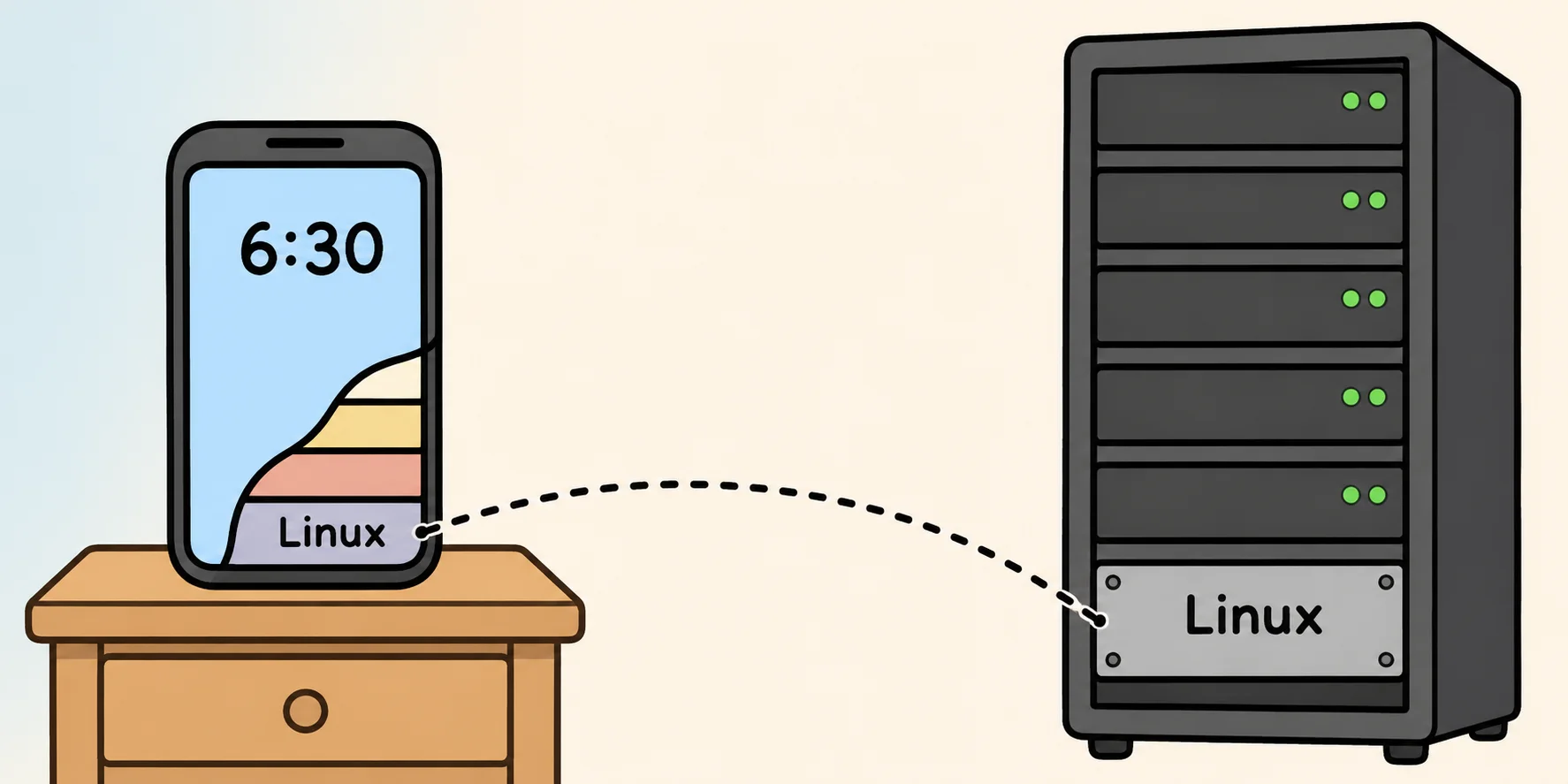
6:30 a.m.: your alarm goes off (Linux)
If your phone runs Android, it runs on Linux. Android's own documentation describes its kernel, the core of the system that talks to the hardware, as built from the open-source Linux kernel, with Android's additions on top.
Linux is at the other end of your day too, on the servers that send you web pages. Among websites whose operating system can be identified, W3Techs finds Linux on about six in ten. The same free software wakes you up and serves the pages you read.
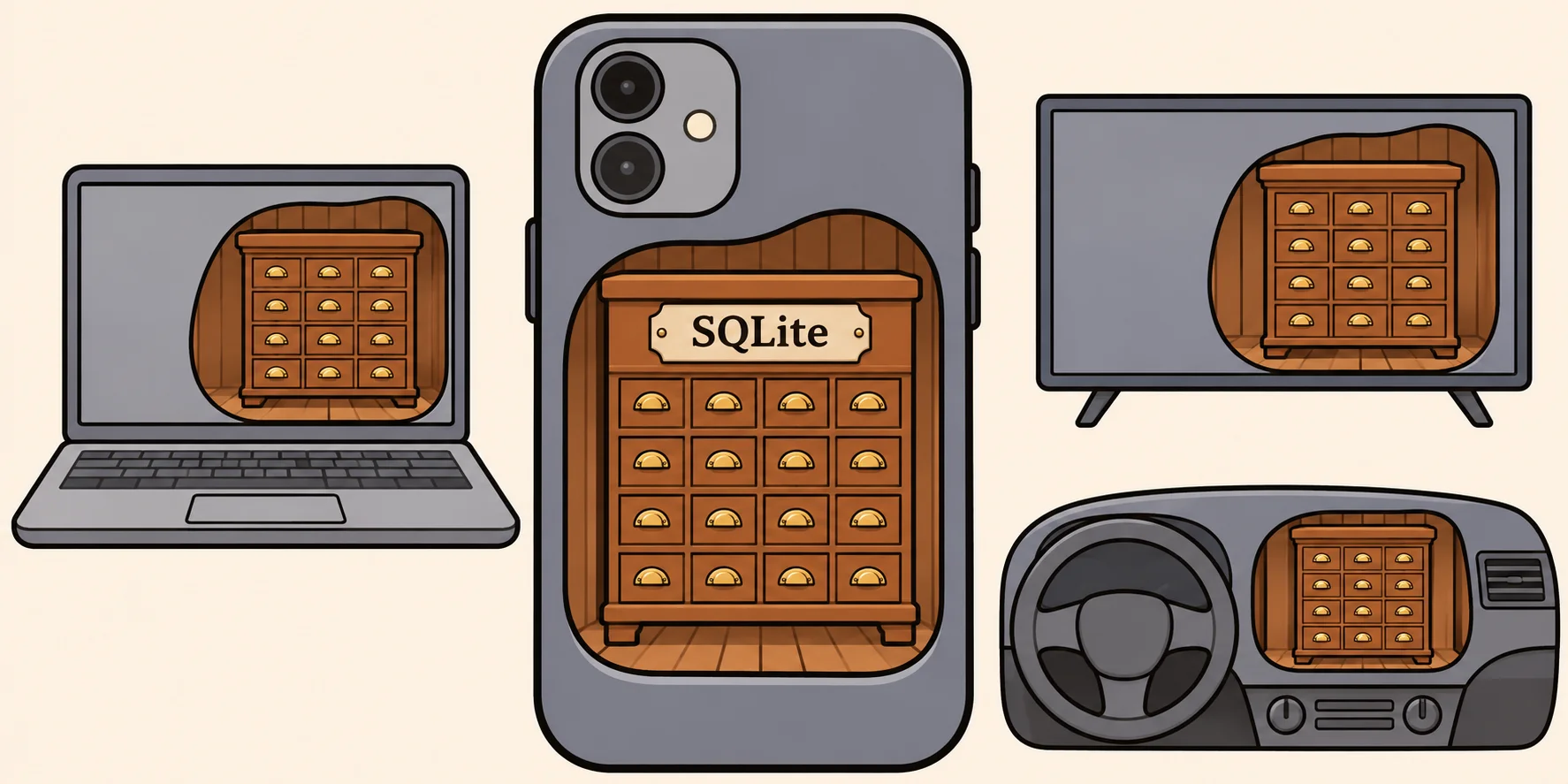
7:00 a.m.: you check your messages (SQLite)
Every app that remembers things needs somewhere to keep them. Very often that place is SQLite, a database small enough to live inside an app. Its makers list it in every Android device, every iPhone, and the Firefox, Chrome and Safari browsers, and estimate that there are over a trillion SQLite databases in use. They think it's likely used more than all other database engines combined.
Its authors also gave it to the public domain: anyone may copy it, change it, sell it or use it for anything, with no license at all.
8:00 a.m.: you open a browser (Chromium, Firefox and WebKit)
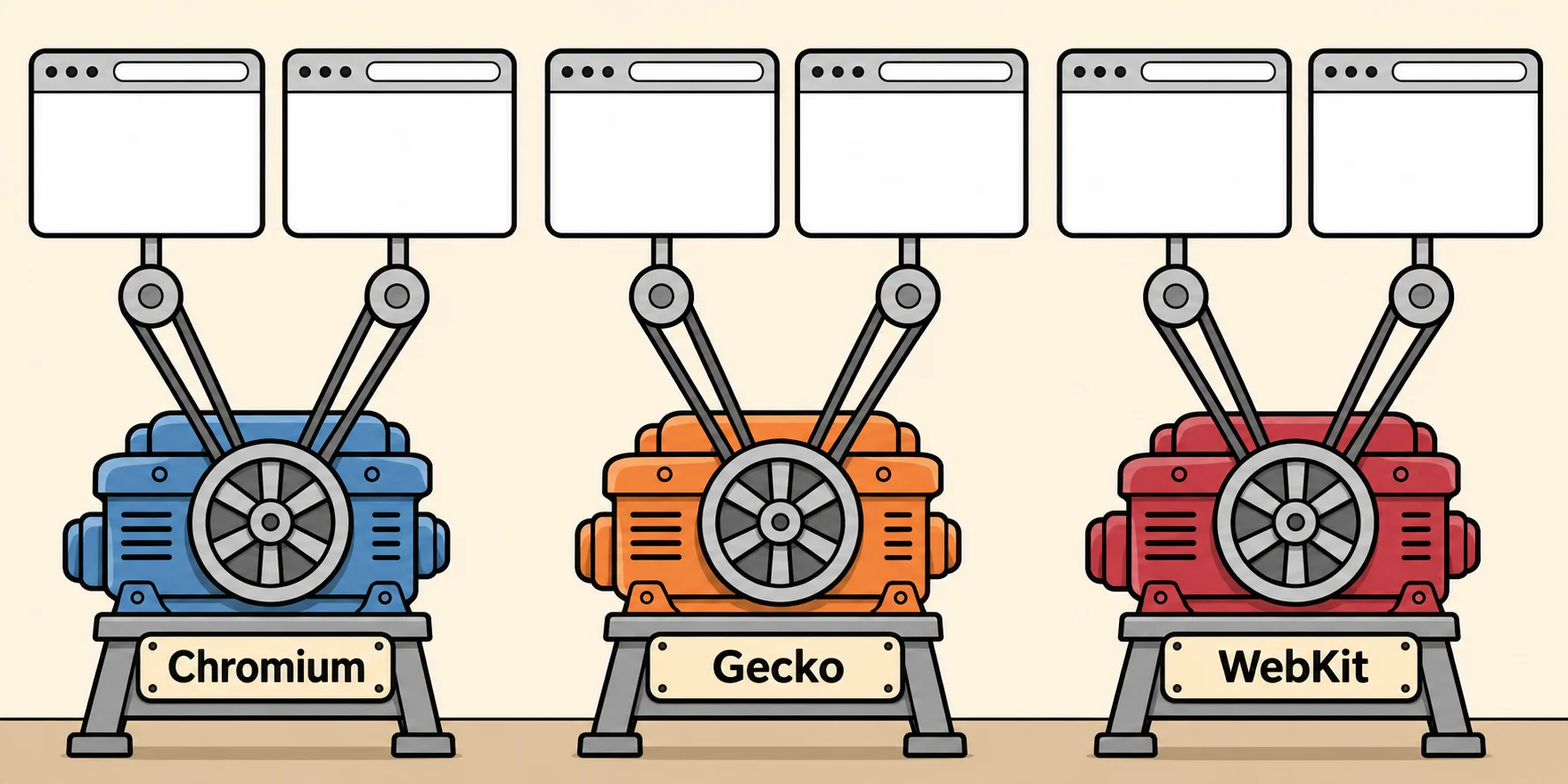
A browser engine is the part of a browser that turns a page's code into the page you see. The browsers most people use are built on one of three open-source engines:
- Chromium, the open-source project behind Google Chrome. In 2018, Microsoft announced it would rebuild Edge on Chromium too.
- Gecko, the engine in Firefox, which Mozilla develops in the open.
- WebKit, the open-source engine used by Safari.
Companies that compete for your attention every day share the most important part of their browsers with each other, and with you.
8:05 a.m.: the padlock in the address bar (Let's Encrypt)
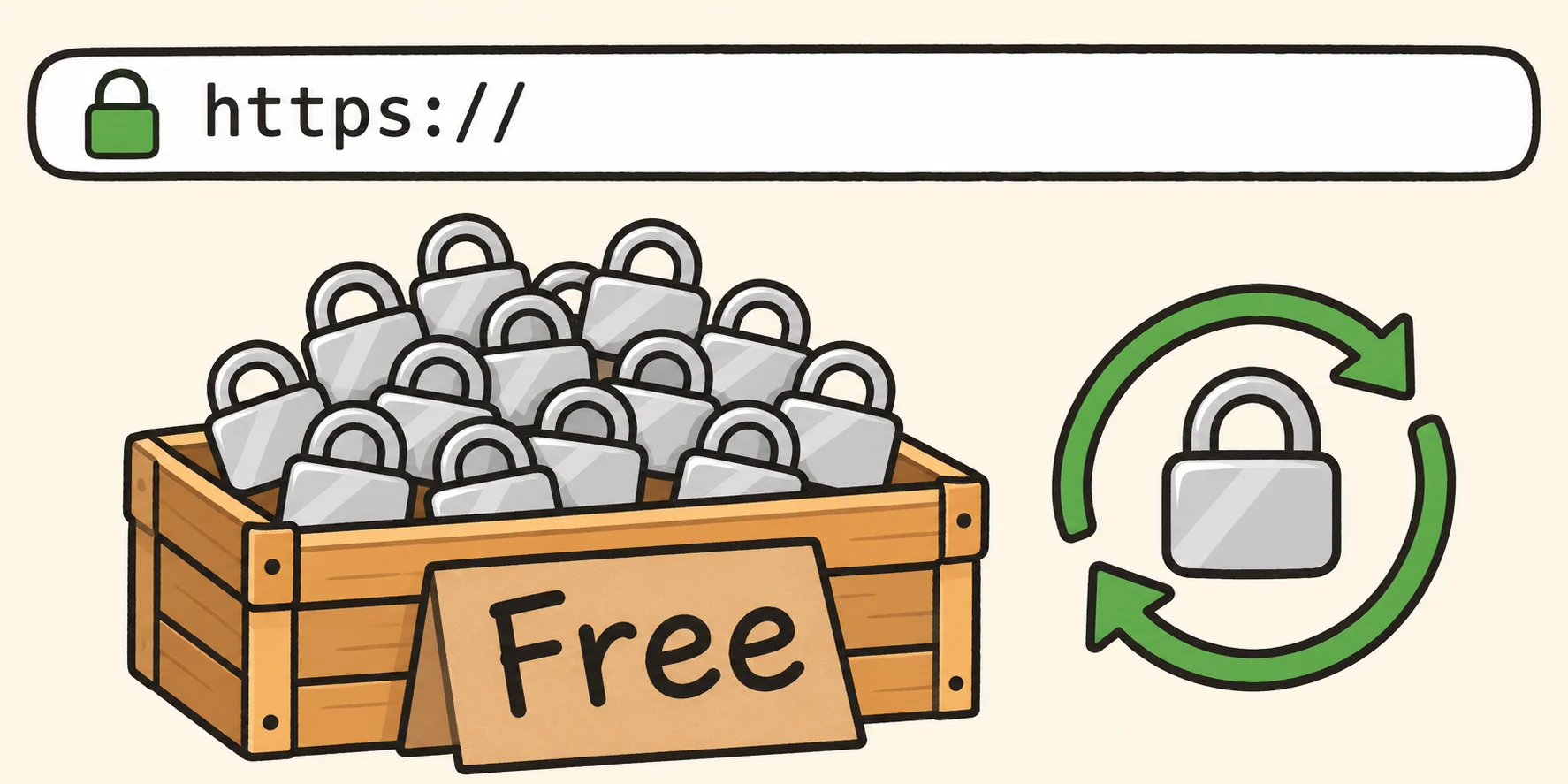
The padlock next to a web address means the page traveled to you encrypted: scrambled so nobody along the way can read it or change it. A site needs a security certificate for that, and certificates used to cost money every year, which kept many small sites on plain, unencrypted http.
Let's Encrypt changed that. It's run by a nonprofit, the Internet Security Research Group, and gives certificates away free, with software that renews them automatically. It now provides them to more than 700 million websites, and the software that runs it, Boulder, is open source.
9:00 a.m.: you save your work (Git)
Git gives your code save points, like a video game: save, try something, and go back if it goes wrong. It also lets a whole team work on the same code without overwriting each other.
Linus Torvalds, who started Linux, wrote the first version of Git in April 2005 when the Linux project needed a new way to track its changes. Today 93% of developers in Stack Overflow's survey say they use it, and it has always been free.
9:30 a.m.: you write some code (VS Code, Node.js, Python and .NET)
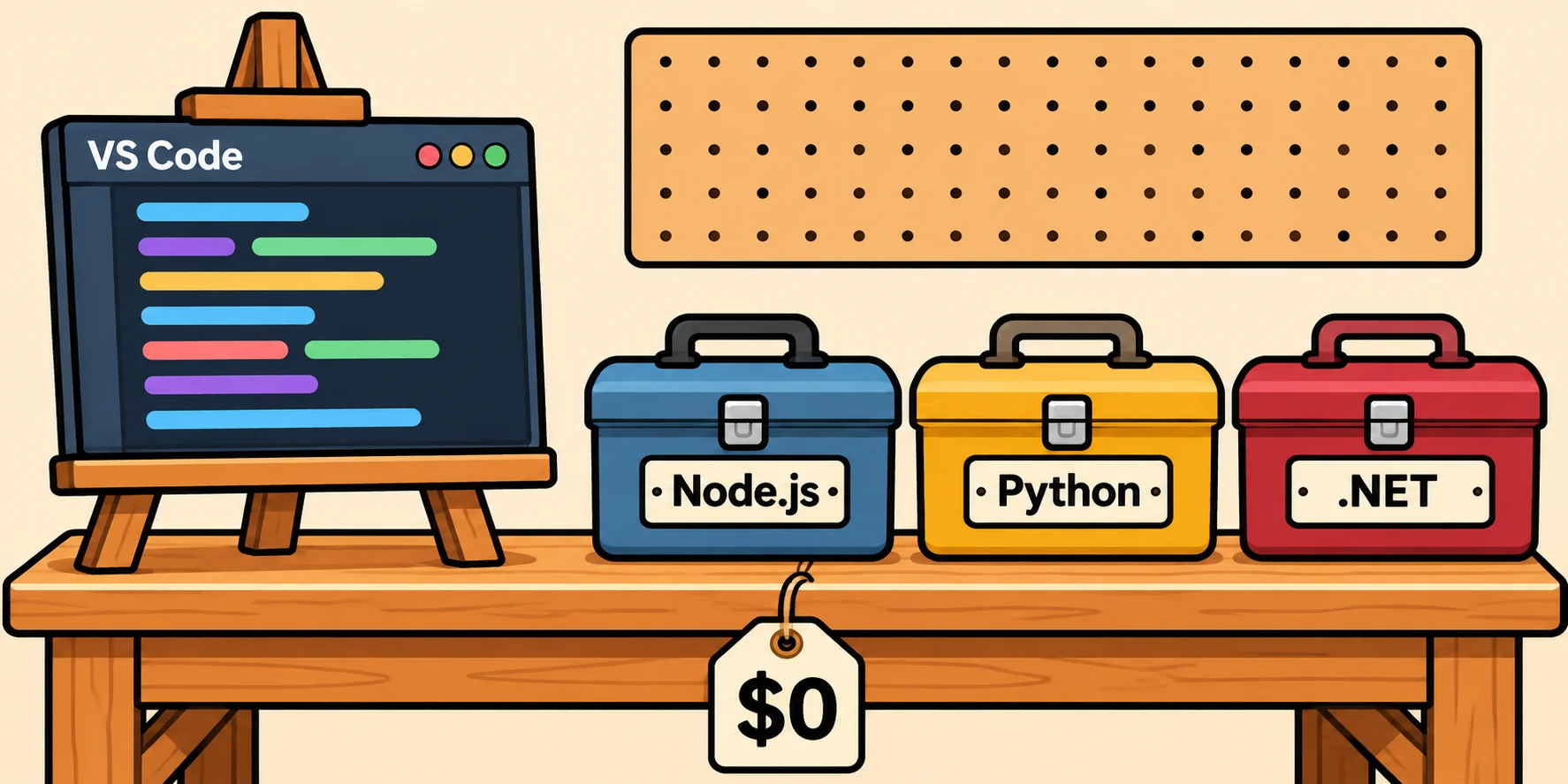
VS Code was the most used editor in Stack Overflow's 2025 Developer Survey, picked by about three in four developers. To be accurate about it: its source code is open source, under the MIT license, and the version you download from Microsoft is built from that code with a few Microsoft additions, under Microsoft's own license. Either way, it's free.
The languages run on open source too:
- Node.js, which runs JavaScript outside the browser, is MIT-licensed and looked after by the nonprofit OpenJS Foundation.
- Python is looked after by the nonprofit Python Software Foundation, and every Python release is open source.
- .NET, which runs C#, is open source, mostly under the MIT and Apache 2.0 licenses.
That's why learning to code costs nothing to start. The tools professionals use every day are the same ones you can download tonight. Our Node.js in Depth, Python in Depth and C# Full-Stack Bootcamp courses use them from the first lesson.
All day, out of sight (curl)
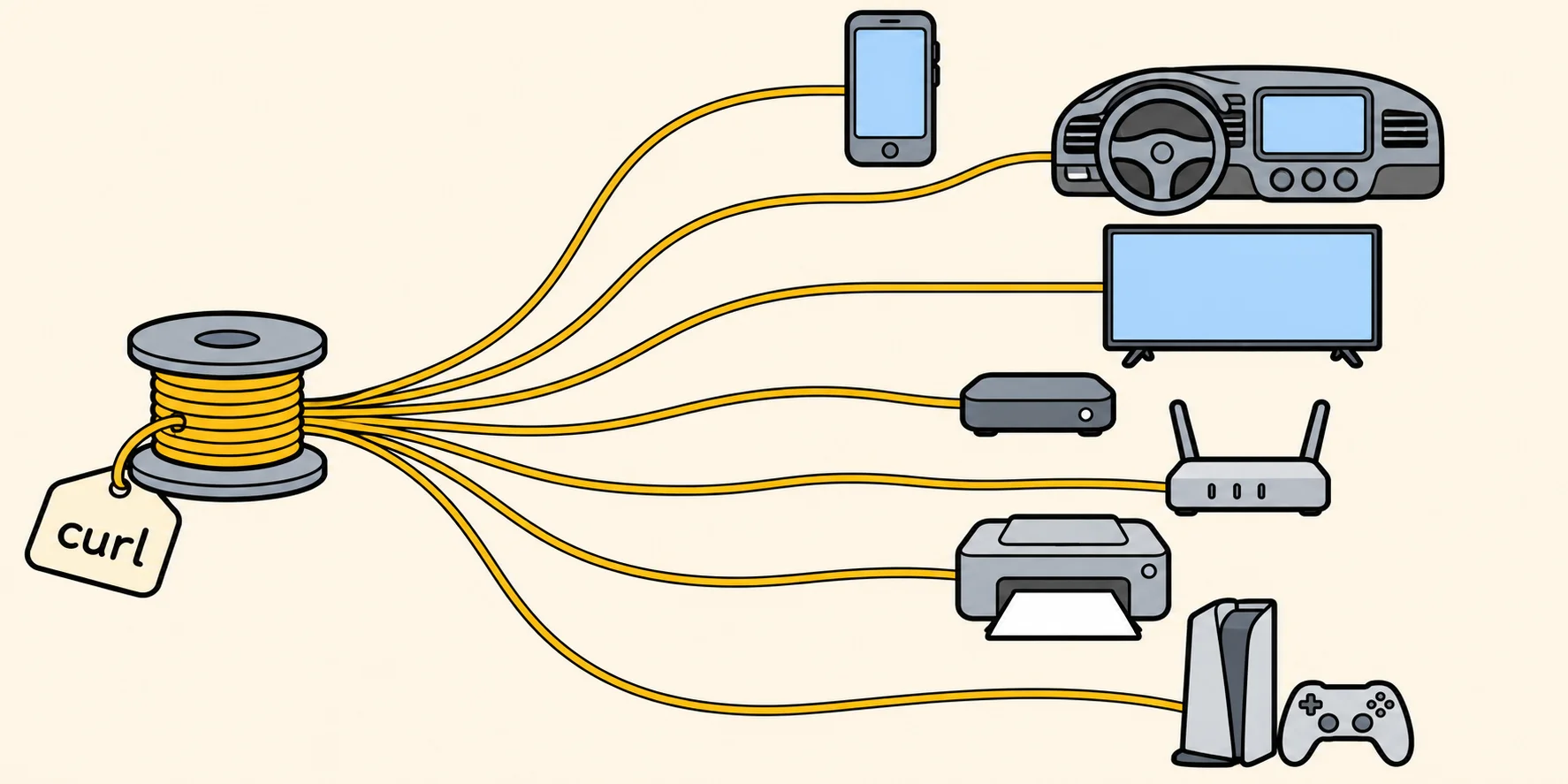
Whenever a program needs to fetch something from the internet, there's a good chance it asks curl, or its library, libcurl, to do it. The project's own guide says libcurl is used in phones, car dashboards, TVs, set-top boxes, home routers, printers and game consoles, and estimates more than twenty billion installations. It's honest that nobody can count them exactly, and its lead developer, Daniel Stenberg, has written that it might be eighteen billion, or forty.
What's remarkable is who's behind it. In 1996 Stenberg extended a small open-source download tool so he could fetch currency exchange rates, and he soon became its maintainer. The tool grew into curl, and he has led it ever since. A single project, guided by the same person for about thirty years, runs inside billions of devices.
How to say thanks
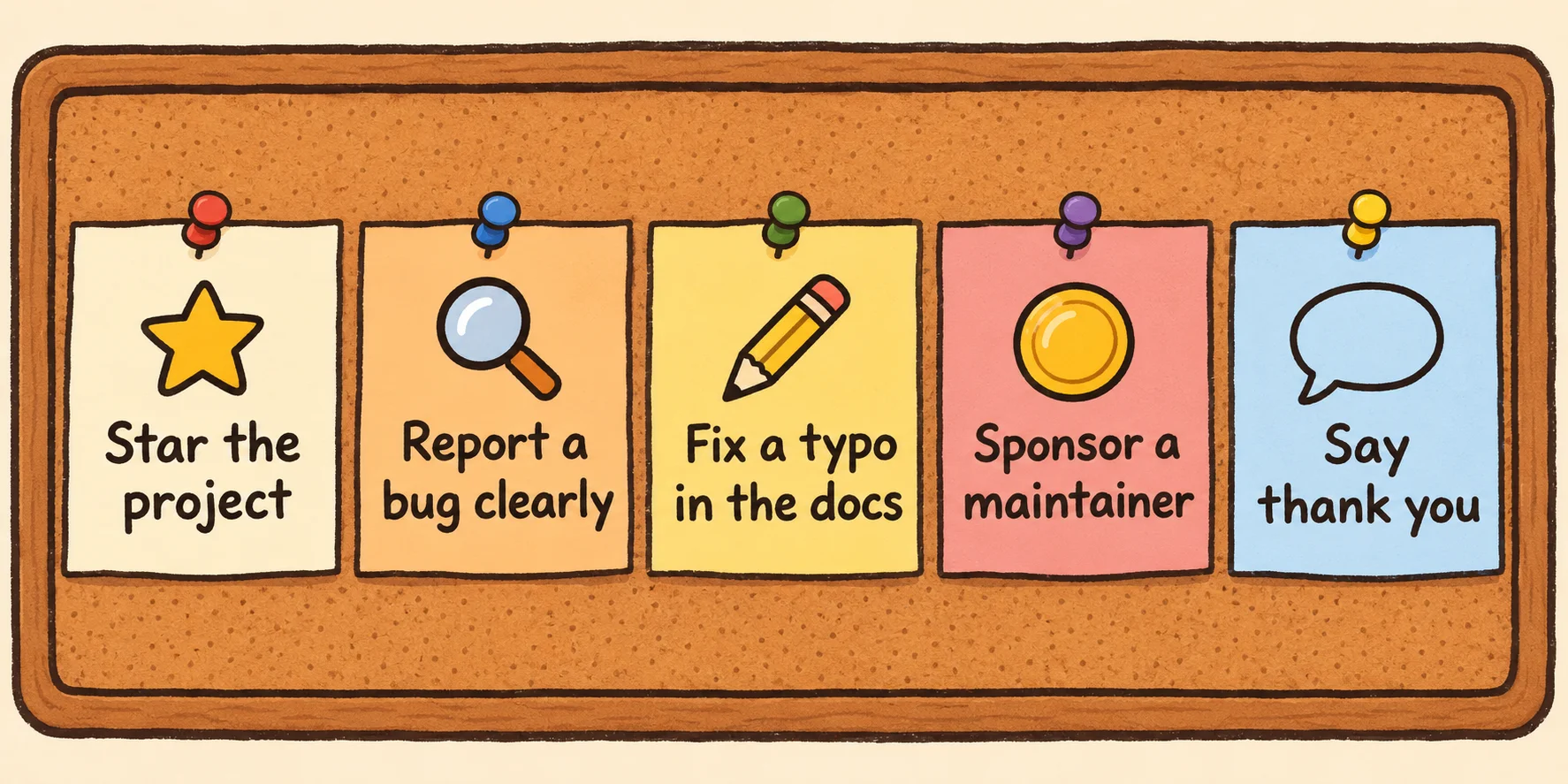
You don't need to write code to give something back. Here are a few ways, from a click to a contribution:
- Star the project on GitHub. It's free, takes a second, and shows the people who maintain it that their work is used.
- Report a bug clearly. Say what you did, what you expected and what happened instead. A clear report saves a maintainer hours.
- Fix a typo in the documentation. Many people make their first contribution this way, and it helps the next beginner who reads that page. (Check how the project takes changes first: SQLite, for one, doesn't accept outside code.)
- Sponsor a maintainer if you're able to. Many projects take donations, and small monthly amounts add up.
- Say thank you. A kind word in a project's forum or chat goes further than you'd think.
Happy Thanksgiving.
Sources
- Android Open Source Project, Kernel overview: the Android kernel is based on the upstream Linux kernel, with Android-specific additions.
- W3Techs, Usage statistics of Linux for websites, 2026: Linux on about 62% of the websites whose operating system W3Techs knows.
- SQLite, Most Widely Deployed and Used Database Engine: every Android device, every iPhone, the Firefox, Chrome and Safari browsers; likely used more than all other engines combined; over one trillion databases in active use.
- SQLite, SQLite Is Public Domain: dedicated to the public domain, free for any purpose; open-source but not open-contribution.
- The Chromium Projects, Chromium: the open-source project behind Chrome.
- Joe Belfiore, Microsoft, Microsoft Edge: Making the web better through more open source collaboration, Windows Experience Blog, December 6, 2018: Edge to be rebuilt on Chromium.
- Mozilla, Firefox Source Docs: Firefox's source and how it's developed in the open.
- WebKit, webkit.org: the open-source browser engine used by Safari.
- Let's Encrypt, About Let's Encrypt and letsencrypt.org: a free certificate authority run by the nonprofit Internet Security Research Group; automatic renewal; more than 700 million websites.
- Let's Encrypt, Boulder on GitHub: the open-source software that runs the certificate authority.
- Scott Chacon and Ben Straub, Pro Git, A Short History of Git: Linus Torvalds and the Linux community built Git in 2005.
- Stack Overflow, Beyond Git: The other version control systems developers use, January 9, 2023: 93% of developers in its survey use Git.
- Stack Overflow, 2025 Developer Survey: Technology: Visual Studio Code used by 75.9% of respondents.
- Microsoft, Differences between the repository and Visual Studio Code and the Visual Studio Code license: the source under MIT, the Microsoft download under a Microsoft product license.
- Node.js, LICENSE on GitHub (MIT), and the OpenJS Foundation.
- Python Software Foundation, History and License: all Python releases are open source.
- Microsoft, .NET is open source: .NET's repositories, mostly under MIT or Apache 2.0.
- curl, Users of curl, Everything curl: more than twenty billion installations, estimated; libcurl in phones, car infotainment, TVs, set-top boxes, routers, printers and game consoles.
- Daniel Stenberg, curl turns 26 today, daniel.haxx.se, March 2024: "Maybe there are just eighteen. Or forty."
- curl, History of curl: Daniel Stenberg extended HttpGet in late 1996 to fetch currency rates and soon became its maintainer.
Tags: open-source, thanksgiving