The junior job market is hard. Here's what's working.
Entry-level developer hiring is down, and the data says so. But the scariest number going around has no source, postings are climbing again, and the jobs that exist are going to people a company already knows. Here's what the research shows and what to do about it.
By Gregor Dzierzon ·
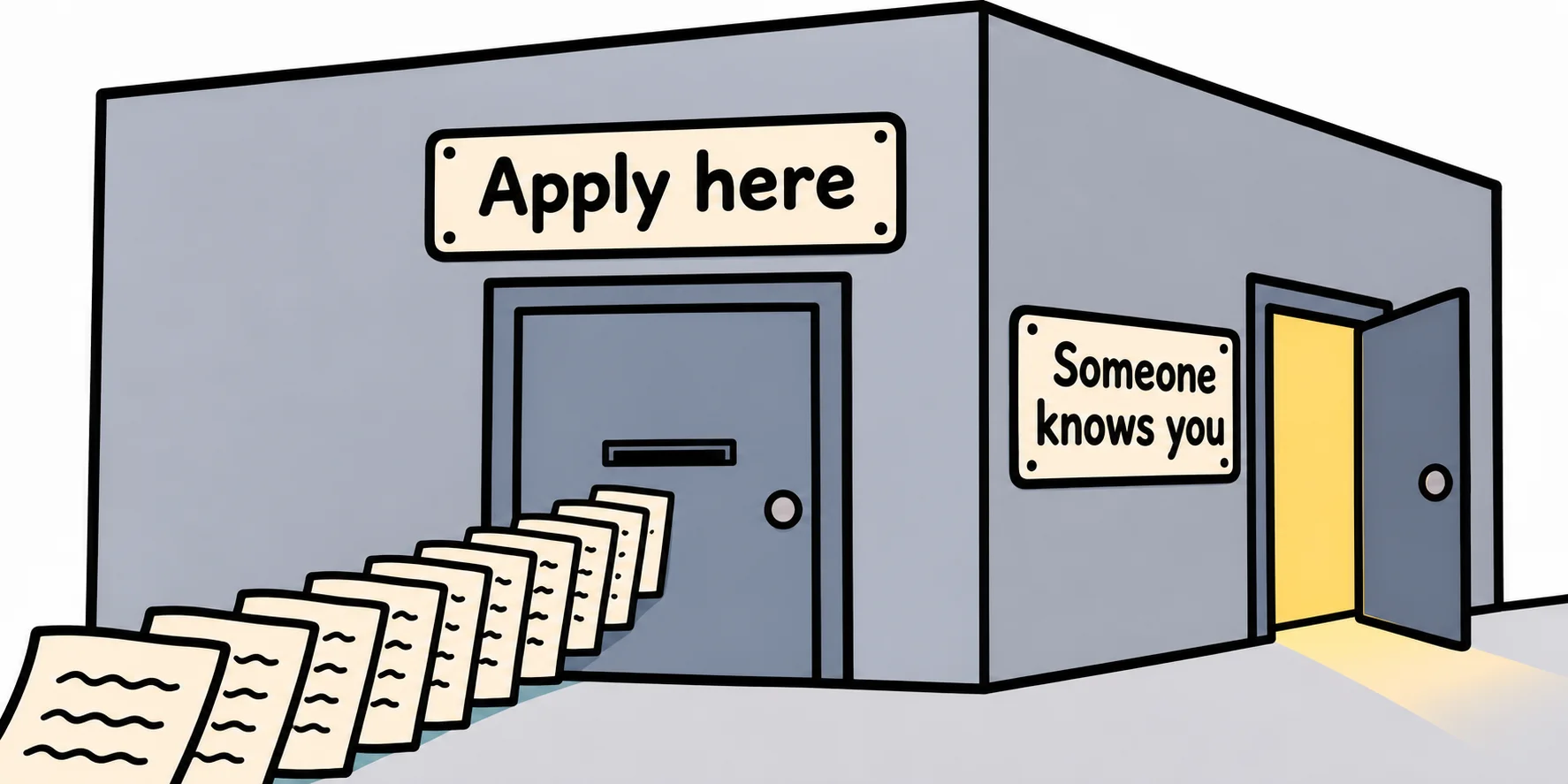
If you're learning to code right now, you've seen the headlines. Entry-level hiring has collapsed. AI took the junior jobs. Don't bother.
Here's my take, and I'll back it up: the junior job market is hard, and most of what you've read about it is wrong in both directions. It's not as dead as the loudest numbers say. It's also not going to open up for someone who just sends 200 applications and waits. The jobs that exist are being filled a different way, and that way is open to you.
I went through the research before writing this. Every number below links to where it came from, and I'll tell you which ones I trust less.
The number with no source
One figure gets passed around more than any other: entry-level software postings fell 67% between 2022 and 2024, and hiring fell 73%.
A writer named Patrick Garvey tried to trace those two numbers back to where they started. He couldn't. His conclusion: neither figure "traces to an identifiable primary source." The closest thing to a citation he found was "industry data tracking US job boards," which doesn't name anybody.

That doesn't mean things are fine. It means a number can be repeated hundreds of times even though no one is actually using it as a measurement. Before you let a number decide what you do with your life, ask three questions:
- Who measured it? A name you can look up, with data they describe.
- What did they count? Job postings, people hired and people employed are three different things.
- Compared with when? A drop measured from a peak year always looks steeper than one measured from an ordinary year.
The rest of this post uses numbers that pass those questions.
First, the bad news: The hard truth that the data says
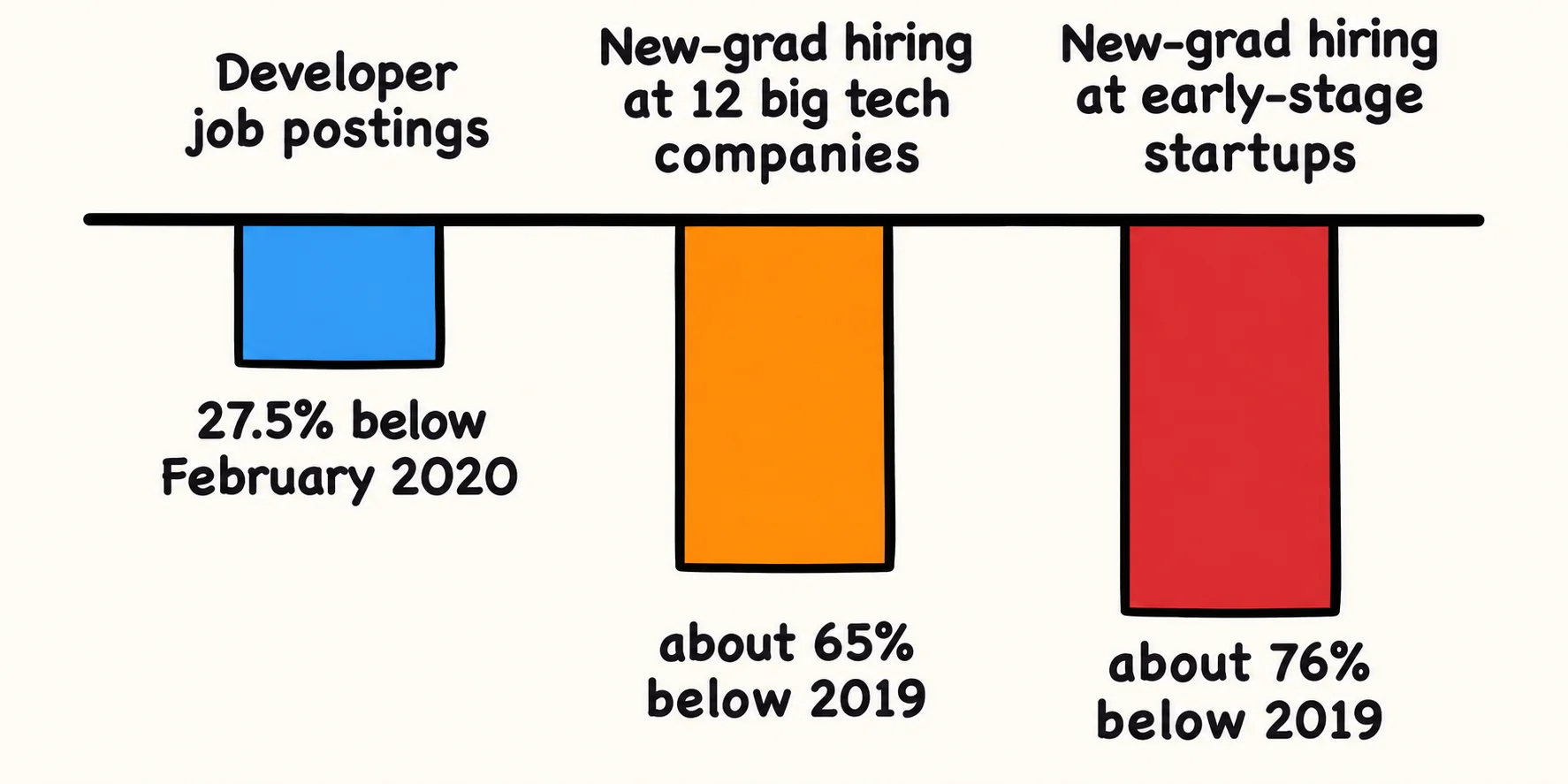
Four measurements, from four different kinds of data, point the same way.
| What was measured | The number | Who measured it |
|---|---|---|
| Software development job postings in the US | About 27.5% below February 2020 (data through June 2026) | Indeed Hiring Lab |
| New-graduate and entry-level hiring at 12 large tech companies | About 65% below 2019 | SignalFire |
| New-graduate and entry-level hiring at early-stage startups | About 76% below 2019 | SignalFire, same report |
| Workers aged 22 to 25 in the jobs most exposed to AI | Down about 11% since November 2022, while the least exposed jobs grew about 10% | Stanford Digital Economy Lab |
The Stanford study is the careful one, so it's worth a closer look. It uses payroll records from ADP covering millions of US workers, which means it counts people who were paid, not ads that were posted. Its August 2026 update puts the employment gap for 22-to-25-year-olds in AI-exposed jobs at about 19%, up from 15% a year earlier. Experienced workers in the same jobs, the authors write, "show no comparable gap."
Two honest notes about these numbers:
- The Stanford authors don't claim AI as the cause. They call their findings "descriptive patterns, not causal estimates," and they list reasons for caution: the gaps shrink once education is accounted for, some of the trends started before AI tools arrived, and the gaps are larger in their payroll sample than in national surveys.
- SignalFire is a venture capital firm working from its own data on tech hiring, not a government agency. Its numbers are about the companies it tracks: 12 of the biggest names and the startups backed by the top 100 investors. That's a slice of the market, not all of it.
One wider number, for scale: across every college major, the Federal Reserve Bank of New York puts unemployment for recent graduates (ages 22 to 27) at 5.2% in the third quarter of 2026, with 42.5% working in jobs that don't usually need a degree. Starting out is hard everywhere right now, not only in software.
But there is hope: What the data also says - things are moving
Here's the part the headlines leave out.
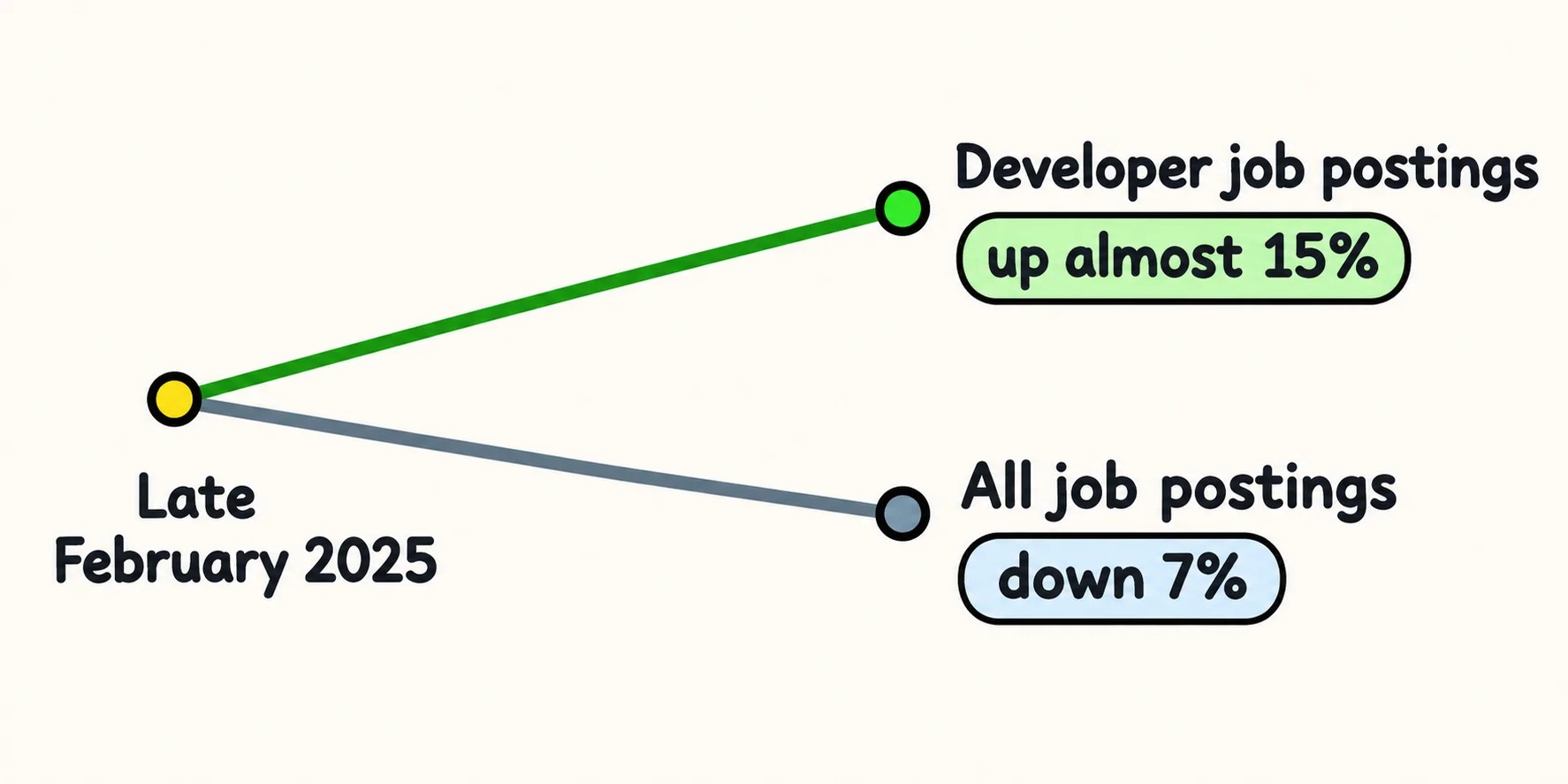
Indeed's numbers show software development postings up almost 15% since late February 2025, while postings for all jobs fell 7% over the same months.
Who is being hired? Indeed looked at that too: 71% of the increase between May 2025 and May 2026 came from senior roles, and 37% came from jobs with AI in the title.
SignalFire sees the same shape. At the 12 big tech companies, overall hiring is 25% below 2019, but engineering hiring is only 11% below. At early-stage startups, engineering hiring is 7% above 2019.
And the long view: the US Bureau of Labor Statistics projects jobs for software developers, quality assurance analysts and testers to grow 10% from 2025 to 2035, with about 106,100 openings a year. The median developer earned $135,980 in May 2025.
So companies want engineers. They are hiring them. What they've cut back on is hiring people they'd have to take a chance on.
What that means for you
This section is my reading of the numbers, not a measurement. Nobody has published a solid study of how junior developers are getting hired in 2026, and the referral statistics you'll find online have the same problem as the 67% figure. So take this as one experienced person's opinion.
Every number above describes the same thing: employers are buying certainty. A senior engineer comes with a track record. A new developer who applies through the website comes with a resume that looks like every other resume in the pile. The hiring manager has no way to tell which of them can do the work, so the safe choice is to hire none of them and post a senior role.

You can't make yourself senior this year. You can stop being a stranger. A person the team has met, whose work someone has seen, who a current employee will speak up for, is a smaller risk than an unknown resume. That's the whole strategy, and the three things below are how to do it.
Networking is the best approach
Of everything I've seen, this matters most: the people who get hired are the people someone already knows.
"Networking" sounds like handing out business cards in a hotel ballroom. It's much plainer than that. It means there are working developers who know your name, have seen something you built, and would mention you when their team has an opening.
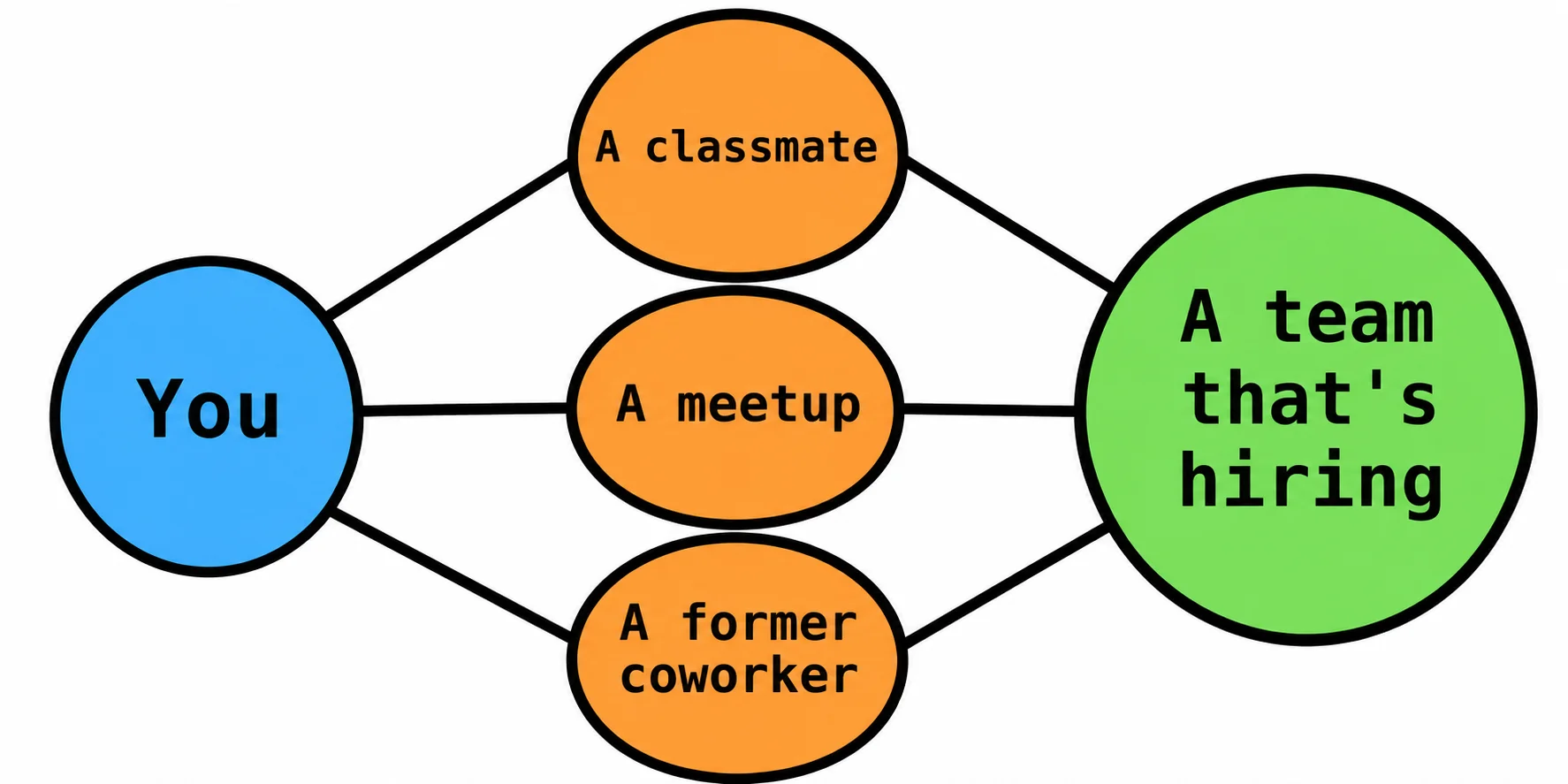
Where those people come from:
- People you already know. Classmates, former coworkers from any job, family friends. Tell them what you're learning and what kind of work you want. Most people have never been told, so they've never thought of you.
- Local meetups and user groups. Go more than once. The third time you show up, people recognize you.
- Online communities where developers help each other. Answer questions you can answer. Ask good ones.
- Your own work, in public. A project someone can click on gives a stranger a reason to remember you.
Go to be useful and curious, not to ask for a job. A conversation that starts with "what does your team build?" goes further than one that starts with "are you hiring?"
It's slow. That's the honest part. It also keeps paying off for your whole career, long after this job search is over.
Connect with the company before you apply
Most people apply first and hope someone notices. Turn that around: talk to someone there, then apply.
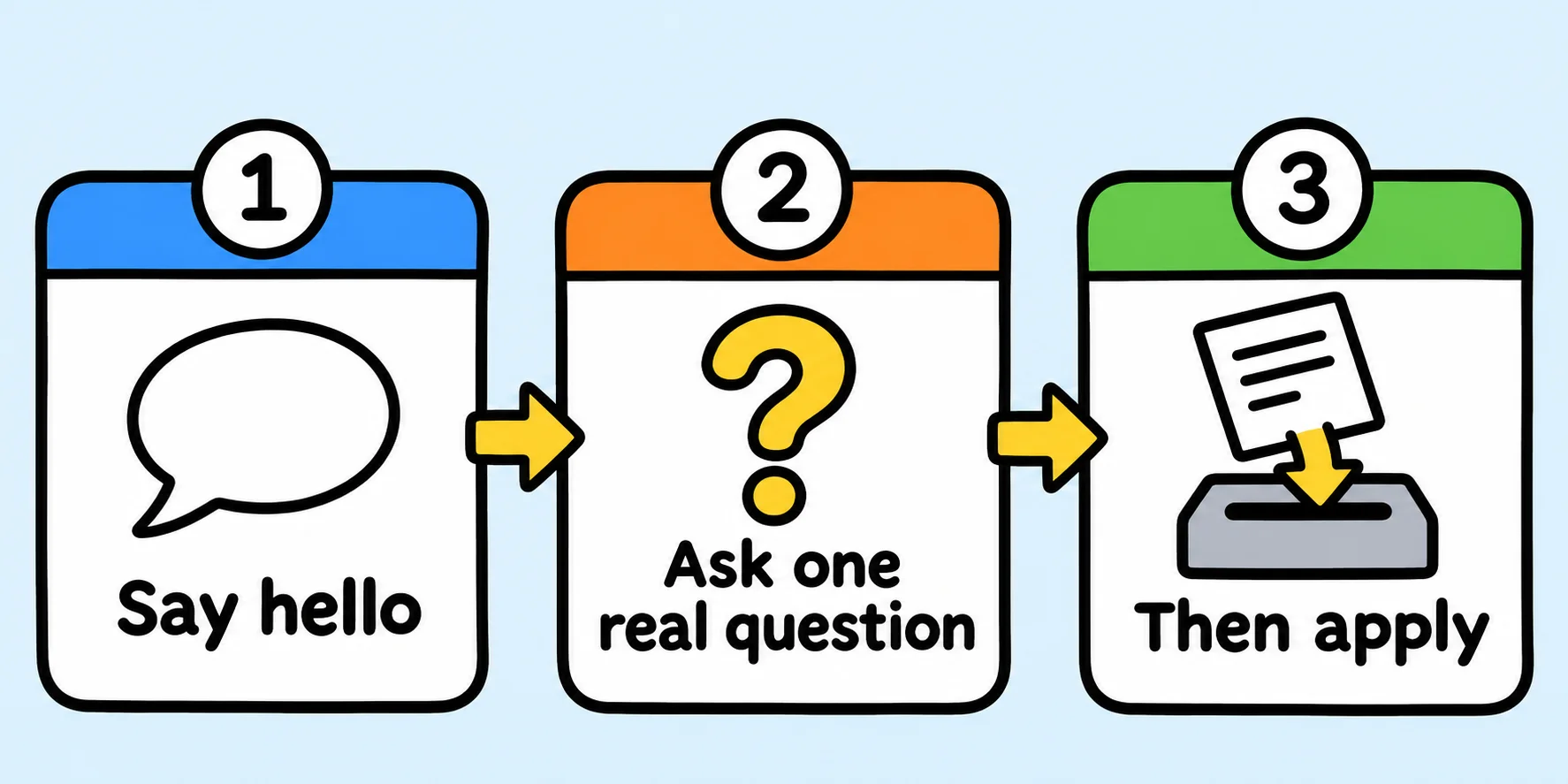
Find a person. Someone on the team you'd join, or a developer at the company, through a meetup, a mutual contact or their public profile.
Ask one real question. About the work, not about your chances. Keep it short enough to answer in two minutes:
Hi Morgan, I saw your team's opening for a junior developer. I've been building REST APIs in C# and noticed the listing mentions SQL Server. Is most of the team's work on new features or on keeping existing systems running? I'd like to understand the job before I apply.
Then apply, and say you talked. One line in your cover note: who you spoke with and what you learned.
Plenty of people won't answer. Some will, and for those companies you are no longer one more resume in the pile. You're the applicant who took the trouble to understand the job.
Adapt your resume to the listing
Don't write one resume and send it to 200 companies. It will not be a good fit for ANY of them. Instead, rewrite the top of your resume for each job you care about, using the listing's own words for the things you've really done. This means that you have to take the time to understand each job listing, and decide if the job is actually one worth applying for.
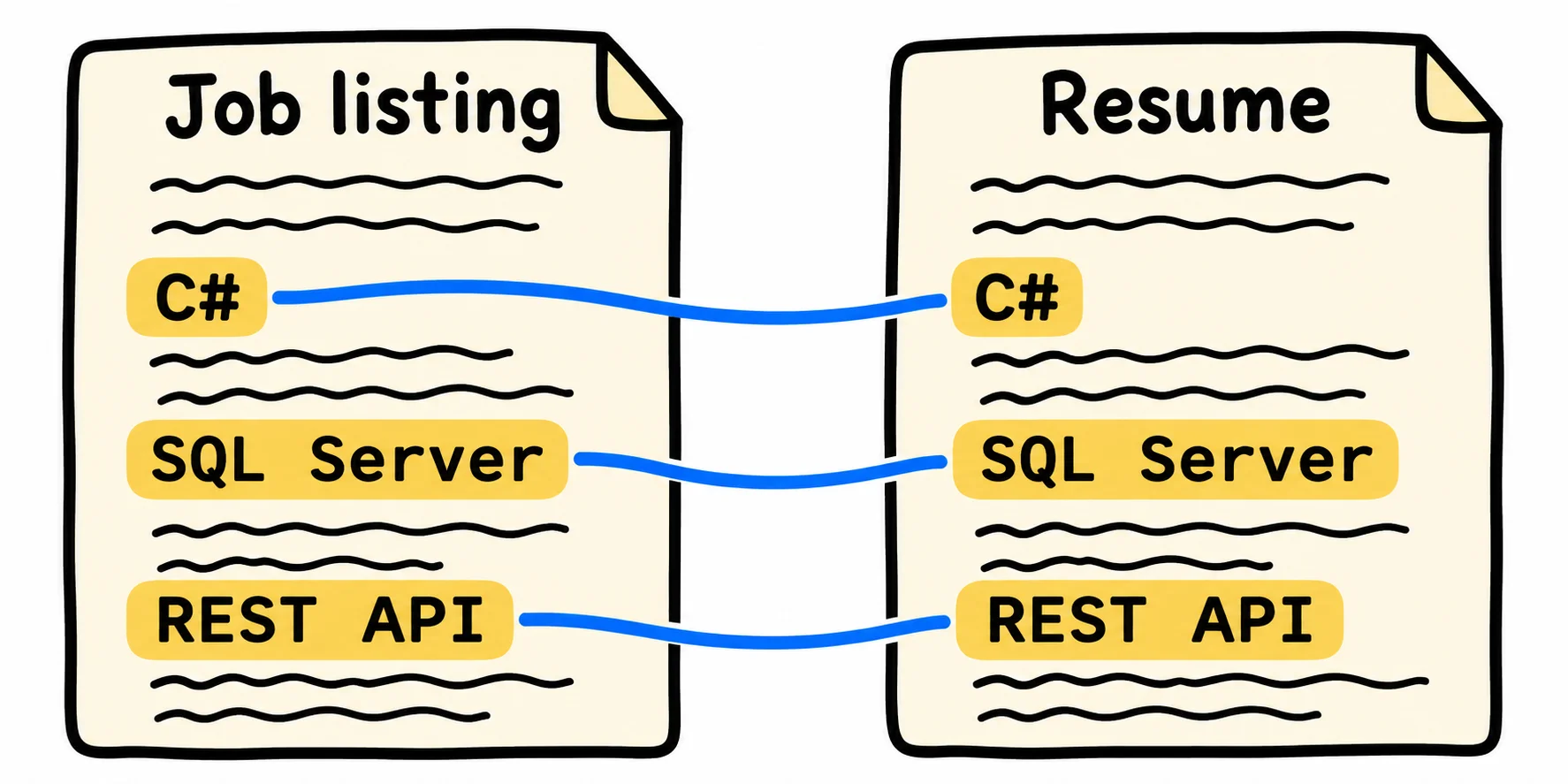
Say the listing asks for someone to "build and test REST APIs with C# and SQL Server." Compare two ways of describing the same project:
| What the resume says | |
|---|---|
| Before | Capstone project: built an online store app with a team. |
| After | Built a REST API in C# and SQL Server for an online store: 12 endpoints, covered by automated tests. |
Same project. The second one answers the listing in its own words, so a recruiter skimming for "C#", "SQL Server" and "REST API" finds all three in one line.
The rule that keeps this honest: You need to choose which things to focus on first. And don't ever add things that aren't true. If the listing asks for something you haven't done, leave it off. If it's on your resume, you'll get asked about it, and if you lied, that is the end of the interview.
This takes time, which means you'll apply to fewer jobs. But that's ok! Because 10 quality applications, where your skills are a good fit, and someone there knows your name, beats 200 generic resumes every time.
The short version
- The market for new developers is hard. Real data says so: postings are below 2020, and new-grad hiring at big tech companies and startups is well below 2019.
- It's also moving. Developer postings are rising while other postings fall, and the long-term outlook is growth.
- The growth is going to people employers feel sure about. Your job is to stop being a stranger.
- Three things work: meet people, talk to the company before you apply, and fit your resume to the listing.
- And before you believe the next scary number: who measured it, what did they count, and compared with when?
It's harder than it was 10 years ago. But it's also not impossible. People are still getting their first developer job, and in my experience they get it through someone who knows their name.
Sources
- Guillermo Gallacher, AI and Job Postings: From Destruction to Creation?, Indeed Hiring Lab, July 8, 2026: software development postings about 27.5% below February 2020 (chart through June 2026); up almost 15% since late February 2025 while all postings fell 7%; 71% of the May 2025 to May 2026 increase from senior roles and 37% from jobs with AI in the title.
- Tawni Cranz and Asher Bantock (contributors), SignalFire's State of Talent Report - 2026, SignalFire, June 22, 2026: new-grad and entry-level hiring down roughly 65% at 12 large tech companies and about 76% at early-stage startups compared with 2019; overall hiring at those 12 companies down 25% and engineering hiring down 11%; engineering hiring at early-stage startups up 7%.
- Erik Brynjolfsson, Bharat Chandar and Ruyu Chen, No Widespread Displacement, but the AI Employment Gap for Young Workers Has Widened to 19%, Stanford Digital Economy Lab, August 12, 2026, and the paper it updates, Canaries in the Coal Mine? Six Facts about the Recent Employment Effects of Artificial Intelligence: ADP payroll data on millions of US workers through June 2026; the 19% gap for workers aged 22 to 25 in AI-exposed occupations; employment in the two most exposed groups down about 11% since November 2022 while the three least exposed grew about 10%; no comparable gap for experienced workers; "descriptive patterns, not causal estimates."
- Federal Reserve Bank of New York, The Labor Market for Recent College Graduates: for graduates aged 22 to 27 in the third quarter of 2026, unemployment of 5.2% and underemployment of 42.5%.
- US Bureau of Labor Statistics, Software Developers, Quality Assurance Analysts, and Testers, Occupational Outlook Handbook, last modified August 27, 2026: 10% projected growth from 2025 to 2035, about 106,100 openings a year, and a median annual wage of $135,980 for software developers in May 2025.
- Patrick Garvey, Junior Developer Hiring in 2026: Correcting the Numbers, Interclypse, August 26, 2026: the 67% and 73% entry-level figures and the finding that neither traces to an identifiable primary source.
- The sections "What that means for you" through "Adapt your resume to the listing" are the author's own experience and opinion, not research findings.
Tags: careers, job-search, junior-developers